
Why Do People Enjoy Running? The Science, History, and Joy Behind Every Step
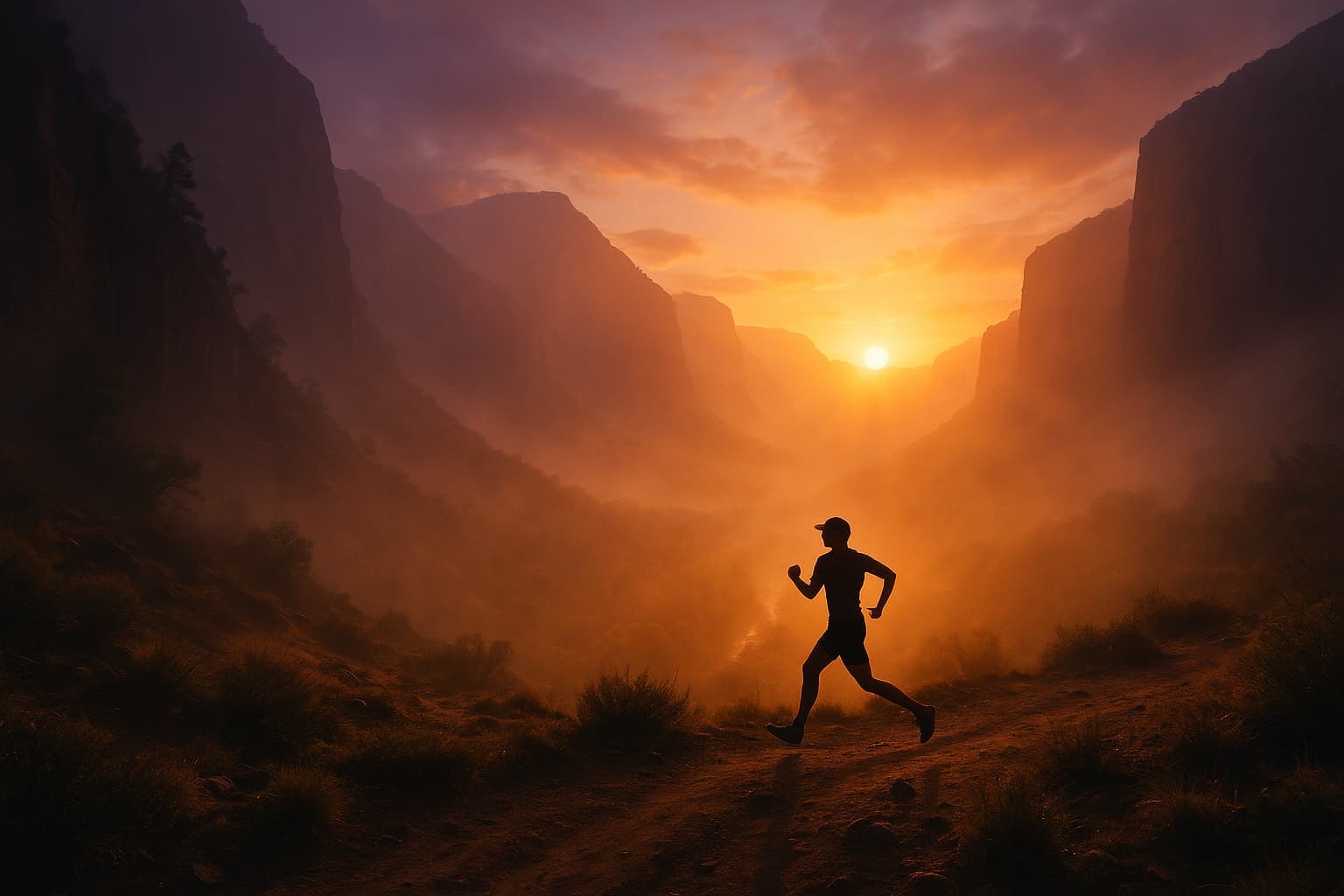
On a mesa above 6,000 feet in the Sierra Madre mountains of northwestern Mexico, a group of runners carried flaming torches under a star-filled sky. They had been running since noon and would continue past midnight — kicking a small wooden ball through rocky terrain, wearing nothing but thin sandals on their feet.
Among them was Daniel Lieberman, a Harvard evolutionary biologist and marathoner. He'd traveled across the world to study these runners, the Rarámuri people. As spectators shouted "Iwériga!" (Breath! Soul!) and "Iwérisa!" (Stamina!), Lieberman noticed something that data alone couldn't capture: the runners were in a trance-like state. Running, for them, wasn't exercise. It was prayer.
"I felt joy," Lieberman later recalled. "It was one of the greatest runs of my life."
What is it about running that can produce this kind of transcendent experience? Why do 621 million people worldwide choose to lace up and hit the road, trail, or treadmill? The answer involves neuroscience, evolutionary biology, ancient culture, and psychology — and it turns out, almost everything you've been told about the "runner's high" is wrong.
Your Brain on Running: It's Not Endorphins
For decades, the "endorphin rush" was the go-to explanation for why running feels good. The story was simple: you run, your body releases endorphins, you feel euphoric. Clean, neat, and almost entirely wrong.
In 2015, a landmark study published in PNAS (Proceedings of the National Academy of Sciences) turned this narrative on its head. Researchers found that the runner's high depends on cannabinoid receptors, not opioid receptors. When they blocked the cannabinoid (CB1) receptors in mice, the anxiety-reducing effects of running disappeared — even though endorphin levels were completely normal.
Here's what's actually happening: when you run, your body produces endocannabinoids — molecules remarkably similar to THC, the active compound in cannabis. The key molecule is called anandamide, named from the Sanskrit word ananda, meaning "bliss." Unlike endorphins, which are too large to cross the blood-brain barrier efficiently, anandamide slips right through.
A 2024 study confirmed this in humans: after a 60-minute outdoor run, participants showed significant increases in endocannabinoid concentrations. Your body is literally making its own cannabis.
But the neurochemical cocktail doesn't stop there. Running also triggers:
- Dopamine — the "I want to do this again" molecule, activating your brain's reward circuitry
- Serotonin — the mood regulator, explaining why running is so effective against depression
- BDNF (Brain-Derived Neurotrophic Factor) — a protein that literally grows new neurons. Scientists call it "Miracle-Gro for the brain"
The peak hit comes after about 30 minutes of moderate-intensity running. Not sprinting, not crawling — just a comfortable, conversational pace. Which, incidentally, is exactly how the Rarámuri run for hours on end.
Born to Run — Literally
Here's a question that doesn't get asked enough: why are humans so good at running long distances?
We're slow. A house cat could beat most of us in a sprint. But over 10, 20, 50 kilometers? Humans can outrun almost every animal on the planet. And that's not an accident — it's evolution.
In 2004, Lieberman (the same guy running with the Rarámuri) published a groundbreaking paper in Nature with Dennis Bramble. Their thesis: humans evolved specifically to run long distances, initially to scavenge meat from predator kills, and eventually to chase prey to exhaustion in what's called "persistence hunting."
The evidence is written all over your body:
- Your Achilles tendon stores and releases energy like a spring with every stride. Chimpanzees don't have one — they don't need it because they don't run.
- The gluteus maximus — the largest muscle in your body — barely activates when you walk. It fully engages only when you run. You literally have a running muscle.
- Your 2-4 million sweat glands allow you to thermoregulate while running. Most prey animals (antelope, deer, kudu) cool down by panting, which they can't do while galloping. After 10-15 km of pursuit, they overheat and collapse. You're still sweating and running.
- The nuchal ligament at the back of your skull stabilizes your head during running. Only animals that run have it.
Your body is a running machine that happens to also do other things. As the Harvard Gazette put it: "Evolution favored scavenging humans who could run faster to the site of a kill and eventually allowed us to evolve into persistence hunters."
Running isn't something we learned to do. It's something we evolved to need.
The Rarámuri: Running as Prayer
Back to those torchlit runners in the Sierra Madre. The Rarámuri (also known as the Tarahumara, made famous by Christopher McDougall's Born to Run) are a community of roughly 80,000 Indigenous people living in Mexico's Copper Canyons — a network of canyons deeper and larger than the Grand Canyon.
Their traditional races, called rarajípare, can last 24 hours or more. Men kick a baseball-sized wooden ball (the komakali) while running; women toss a woven hoop. These aren't competitions in the Western sense — they're community events woven into religious and social life.
Here's what Lieberman's 2020 study in Current Anthropology found, and it's the most important takeaway of this article: the Rarámuri's advantage isn't genetic. It's cultural.
Their physiology doesn't explain their endurance. What does? Running has meaning for them. It's spiritual, communal, celebratory. They run in huaraches (thin handmade sandals) through extreme terrain not because they're "Stone Age superathletes" — that's a Western myth — but because running is inseparable from who they are.
The lesson for the rest of us is profound: when running has purpose beyond fitness, people run farther and enjoy it more. The Rarámuri don't run to burn calories. They run because it connects them to each other, to their land, and to something bigger than themselves.
Flow State: When Running Becomes Meditation
Psychologist Mihály Csíkszentmihályi spent his career studying what he called "flow" — a state of complete absorption where time distorts, self-consciousness dissolves, and the activity becomes its own reward. He found it in surgeons, chess players, rock climbers, and musicians.
Running is one of the most reliable flow triggers that exists.
The conditions are almost perfectly met: the goal is clear (keep running), feedback is immediate (your body tells you everything), and the challenge-skill balance can be adjusted in real time (speed up, slow down, find a hill).
Runners describe it as "meditation in motion." The rhythmic footfalls, the breathing pattern, the landscape passing by — it creates a kind of moving trance. You stop thinking about your inbox, your to-do list, your problems. For 30, 60, 90 minutes, you just are.
This isn't woo-woo spirituality. It's the same mechanism the Rarámuri experience during their torchlit races. It's what Lieberman felt in Mexico. It's your brain entering a state where the default mode network — the part responsible for rumination and worry — quiets down, and the present moment takes over.
Running might be the most accessible form of meditation ever discovered. No cushion needed. Just shoes (and even those are optional).
Running and Mental Health: The Data
In 2024, the British Medical Journal published the largest meta-analysis ever conducted on exercise and depression — 218 randomized controlled trials, 14,170 participants. The conclusion was unequivocal: exercise is as effective as psychotherapy and antidepressants for treating major depression.
Running and jogging specifically showed among the strongest effects. Higher intensity correlated with stronger antidepressant benefits. And unlike medication, the effects appeared within weeks, not months.
Other numbers worth knowing:
- Runners live an average of 3 years longer than non-runners (Copenhagen City Heart Study)
- Just 50 minutes per week of running reduces cardiovascular death risk by 30% (British Journal of Sports Medicine, 2019)
- Running participation has grown 57% globally between 2010 and 2023
- Parkrun — a free, weekly, community 5K — has attracted over 8 million participants across 23 countries
Running doesn't just make you feel good. It literally extends your life.
How to Fall in Love with Running
If you're reading this and thinking "I've tried running and I hate it," you're not alone. Most people who quit running made the same mistake: they ran too fast.
Here's how to actually enjoy it:
-
Slow way down. You should be able to hold a full conversation while running. If you're gasping for air, you're going too fast. Most of the benefits (endocannabinoids, flow state, mental health) come from moderate-intensity running.
-
Forget the watch. At least at first. Run by feel, not by pace.
-
Find trails. Running on soft ground, surrounded by trees, with varied terrain is infinitely more enjoyable than pounding pavement. Nature amplifies every benefit.
-
Run with people. The Rarámuri don't run alone. Join a local running group, find a friend, or try Parkrun.
-
The 10-minute rule. Commit to running for just 10 minutes. You can stop after. You almost never will.
-
Run in the morning. Fasted morning runs have the strongest mood-boosting effect. Start your day having already done the hardest thing on your to-do list.
-
Walk breaks are fine. Run/walk is still running. Even elite ultramarathoners walk the uphills.
-
Find your why. Train for a race, run for a cause, explore your city. The Rarámuri taught us: purpose makes running sustainable.
"I am just a human being. I do believe when you are running, you are conquering the world." — Eliud Kipchoge
The question isn't really "why do people enjoy running?" The question is why we ever stopped. We evolved to run, our brains reward us for running, entire cultures are built around running, and the science overwhelmingly shows it makes us healthier, happier, and more alive.
Maybe it's time to lace up.
Ready to start your running journey?
Ranner is your AI-powered running coach. Personalized plans, real-time guidance, and a community that cares.
Keep reading
- Do Modern Running Shoes Cause More Injuries?More cushioning, more tech, more injuries? What the science actually says about running shoes, minimalism, and why the problem is almost never your footwear.
- Can I Run Every Day? Yes — But Here's How to Do It Without BreakingRunning every day isn't crazy — elites do it. What separates a streak that builds you up from one that breaks you comes down to a few simple rules.